

Haystack Village, Sîrbi, 1999
Potato Pile, Sîrbi, 2003
Potatoes can be stored through the winter in a hole outside under a pile of straw. During the course of the year, they’ll be turned twice and scraped free of sprouts to keep them crispy.
Making a Haystack, Sîrbi, 2002
Vasile tosses the dried hay up to Ileana, who tamps it down so that it can be combed to allow the rain to run off. She must always stay within grabbing distance of the haystack’s central pole, lest she fall. When they are done, he will lay a pole on the side of the haystack, and she will slide down and into his arms.
Hay is a lifeblood for these farmers. Their cows and horses have an appetite that must be satisfied three times a day.
Ion, Glod, 1999
Ion made sure we felt welcome in his village. As we passed his home, he rushed inside and emerged with his arms dripping with walnuts. He would not relent until we had stuffed our pockets with them.
When he was a child, walnuts were used as currency for all manner of goods. Even today they are used in trade with the gypsies for pots.
The Field, Maramures, 2003
In the wide-open fields, fences are used to keep animals out, not in. These stacks will stand in the field through the grazing season. Haystacks outside the fence must be moved - or become a snack for livestock.
Woodcutters, Mara, 1999
Slănina finds a central place in every picnic. Here in the autumn, supply is beginning to wear thin, as the smoked, pork fatback was separated from its pig the previous winter. Yet, even strangers will offer generous hunks to travelers from faraway lands.
Vasile and Palăguţa Borodi, Budeşti, 1999
Romanians from the cities sometimes complain that in Maramureş the people have everything.
“They just go to the woods and get what they need.”
Easter Sunday, Sîrbi, 2000
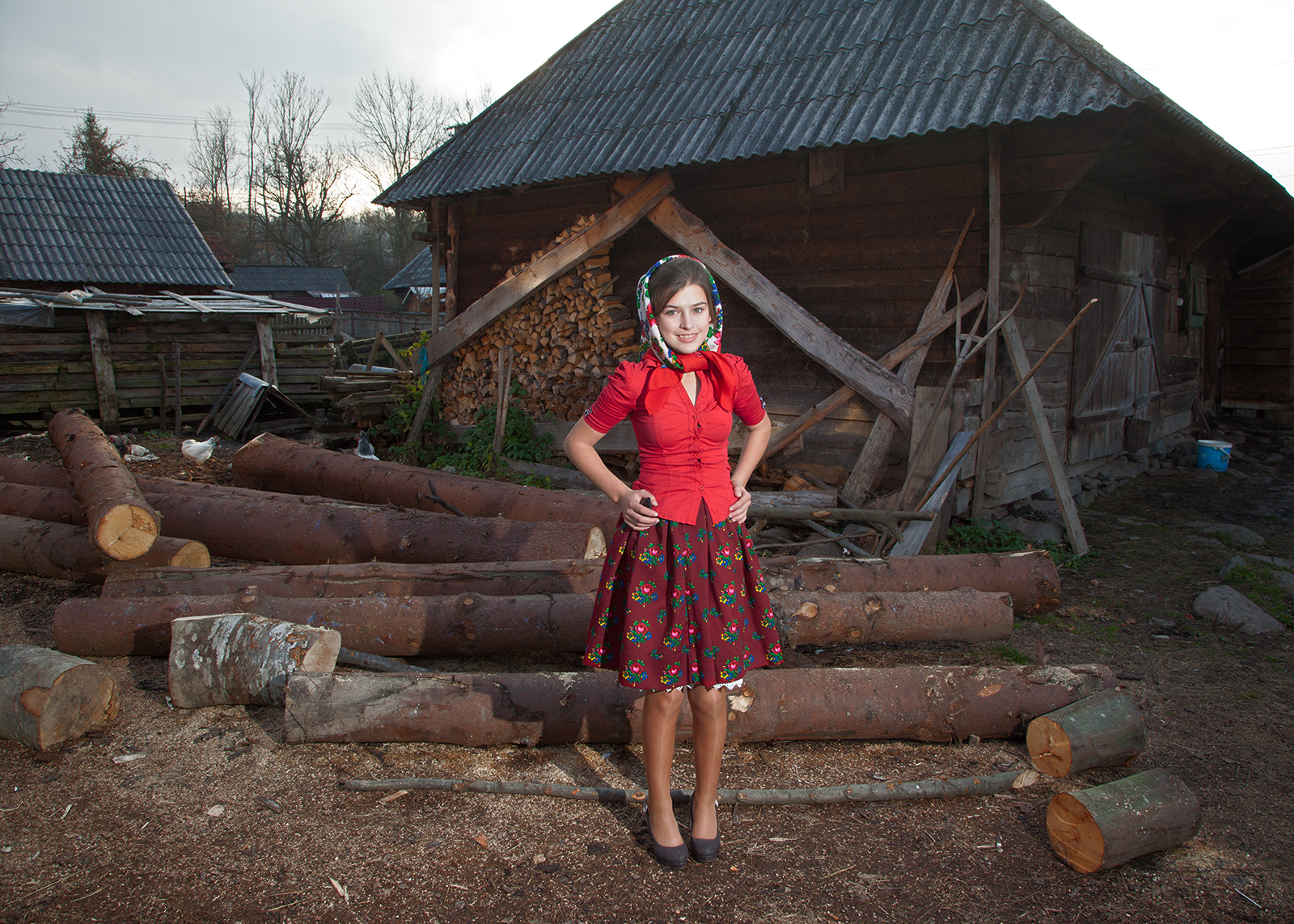
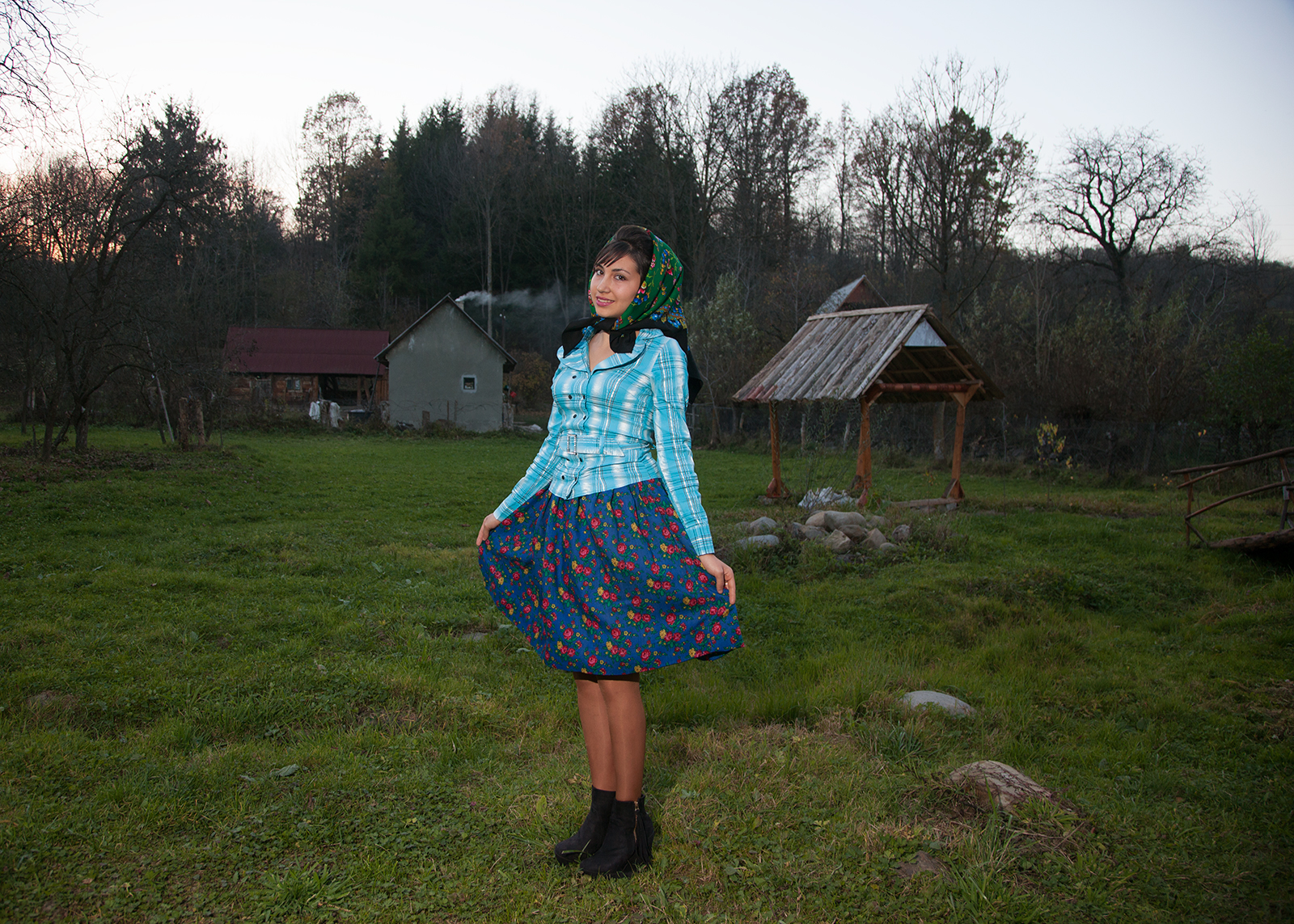
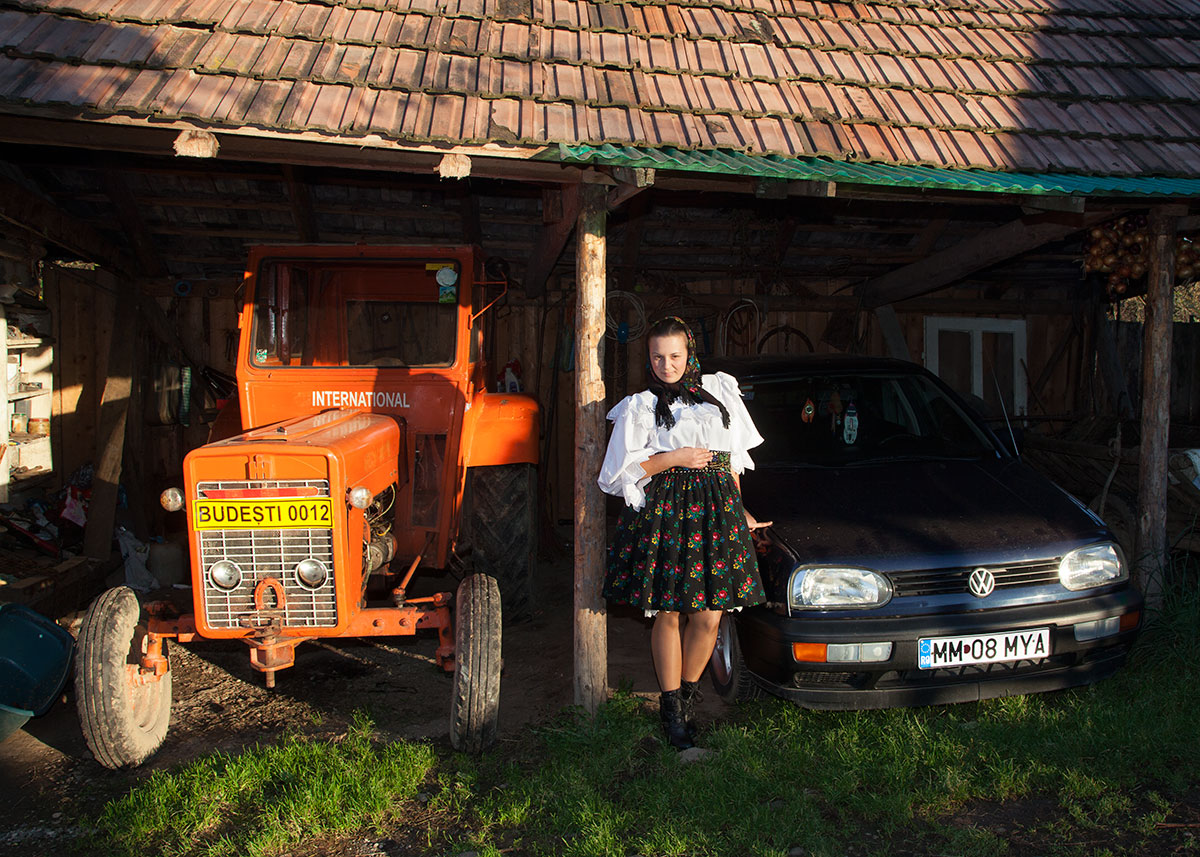
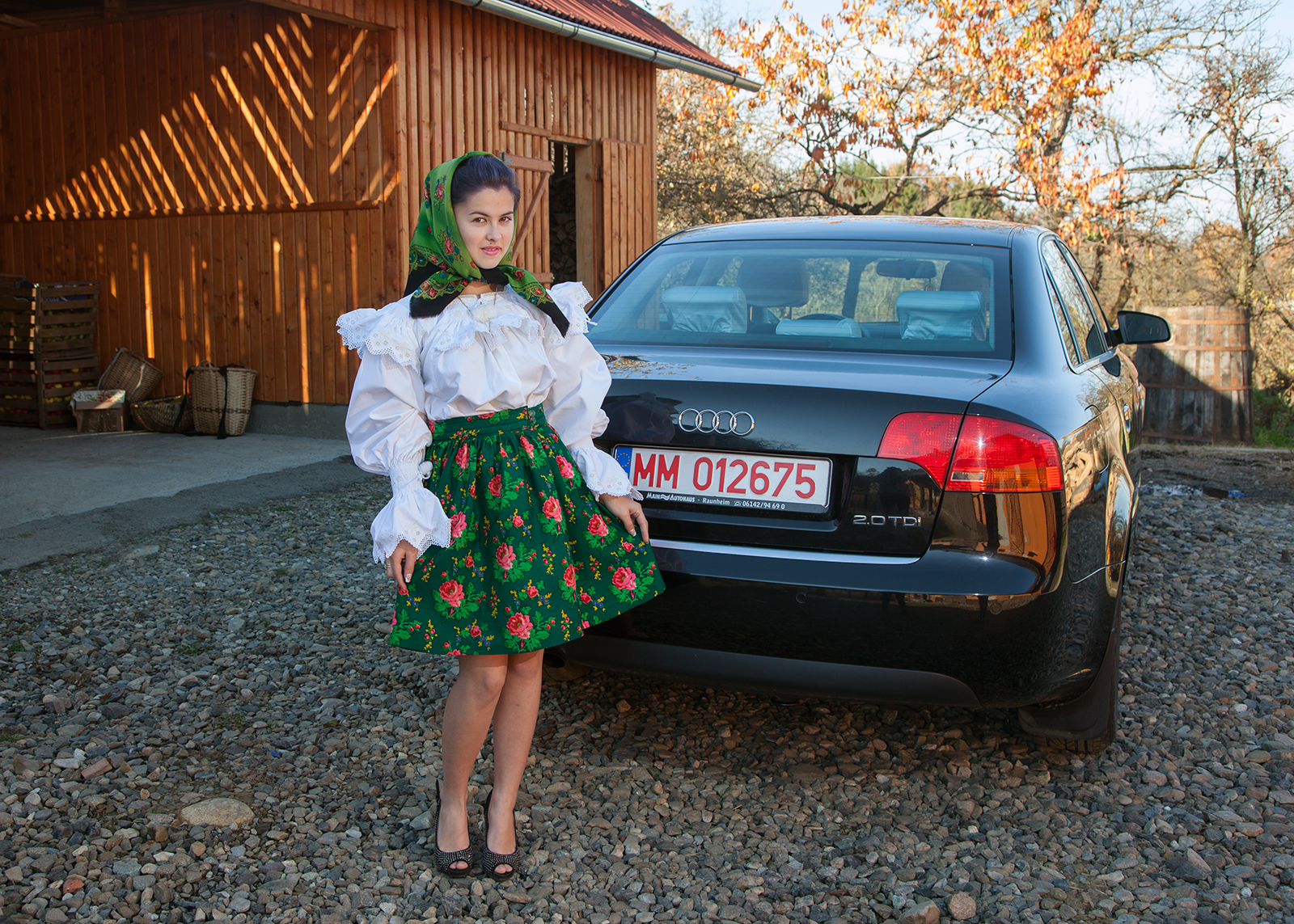
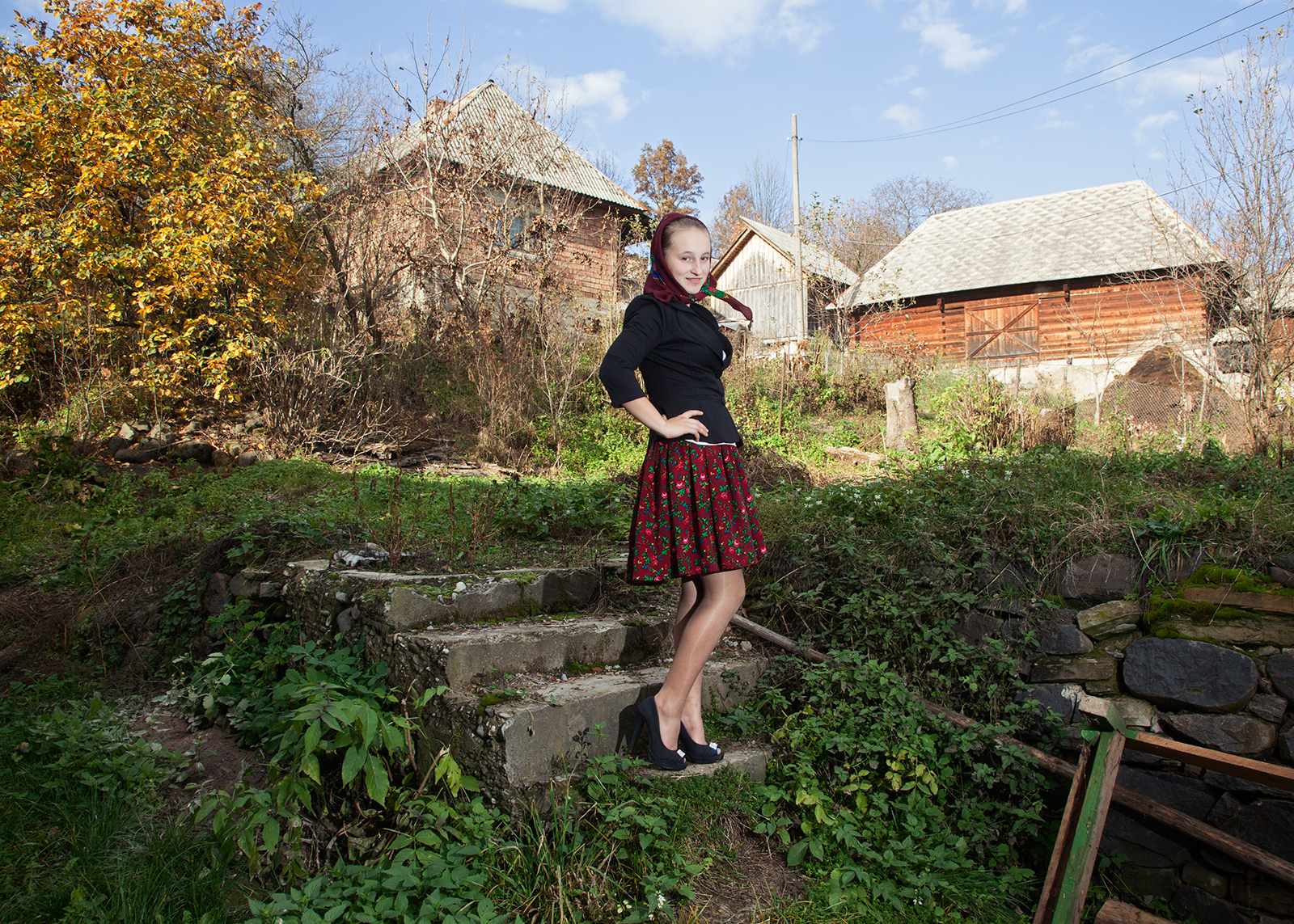
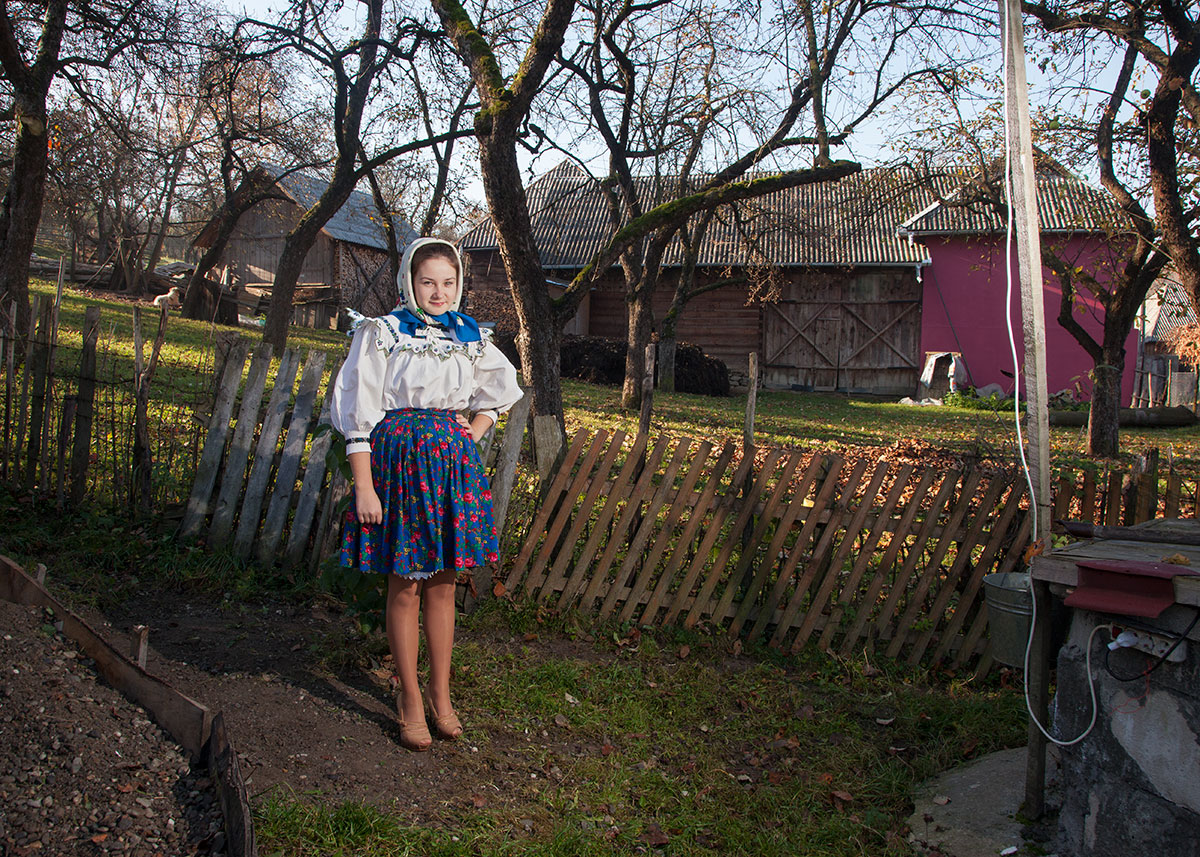
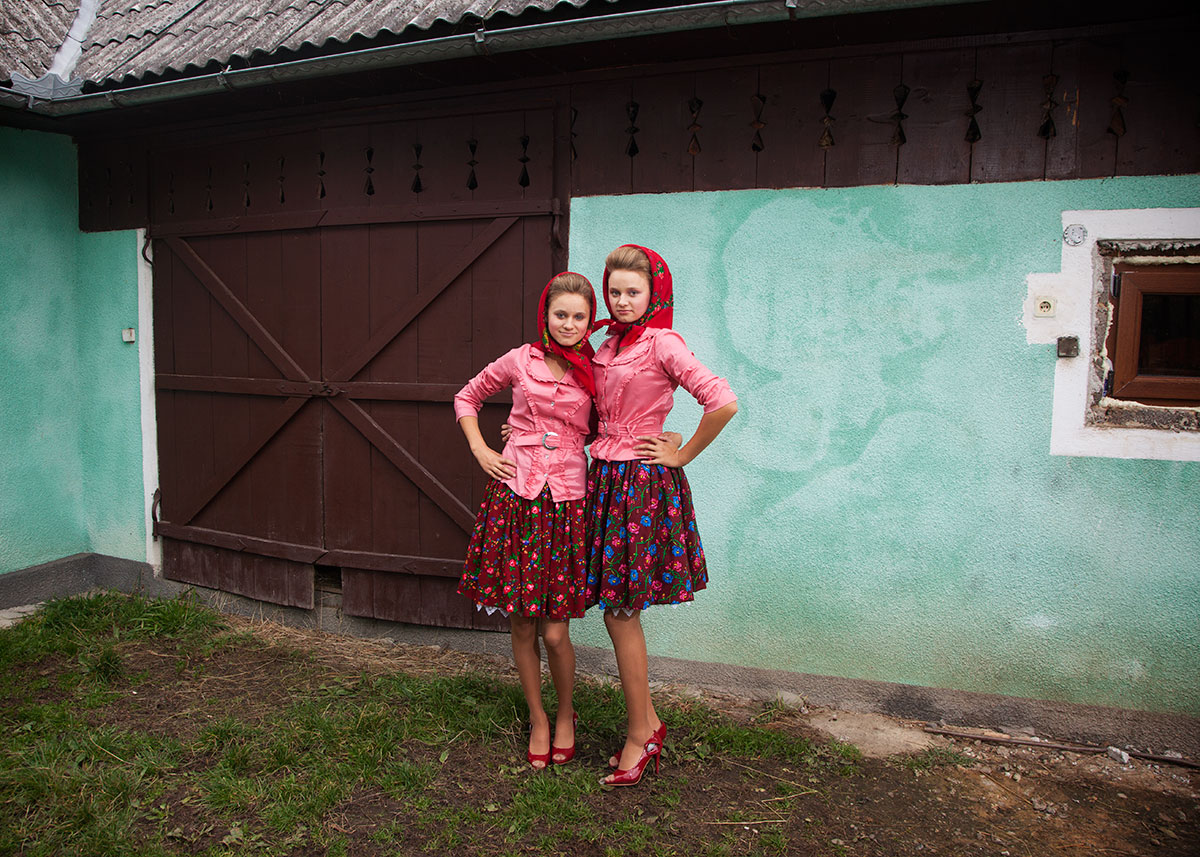
Fashion has changed as women replace the homespun black in their skirts with factory printed fabric and given up their leather and wool opinci -- the footwear of tradition -- for vinyl pumps.
What remains constant is Sunday afternoon, when one learns to flaunt one’s sense of style.
Birth of Florica, Sîrbi, 2000
While the birthing mother stands, the family pulls out the steaming calf with the help of towels twined around its hooves. It will stay with its mother for a few hours, then be fed the rest of its life by her owner as a way of insuring there is enough milk left for the family’s needs.
Pig Head, Sîrbi, 2000
There is virtually no waste when butchering a pig. Even the cranium is boiled for soup and soap.
The Harvest, Sîrbi, 2000
In August, oat fields paint the landscape with golden rectangles. A family must cut their crop before it is fully ripe, or the seeds will be lost to the earth. To prepare the stalks for being threshed, they first tie them in bundles.
Hat Maker and Storyteller, Sîrbi, 2000
Hats are sewn from ribbons of woven straw. This traditional “clop” hat maker, Ion, trades with a distant Saxon village for his materials. “They are the only ones who still use old straw and know how to make the weave tight and soft.”
Three Bătrîne, Budeşti, 2000
Little girls and grandmothers wear the square hand-woven aprons called zadii. Older folks of both sexes wear the wool wrappings around their shins, called obdeli, which are tied in place by thongs on their pointed shoes, called opinci. Though these shoes are now made from old inner tubes and car tires, they are still recognizable as footwear that predated the Romans.
They dress in their finest on Sundays and religious holidays. A Maramureşancă (Maramureş peasant woman) knows that city folk do not dress or believe as she does. Even though those people may command more respect, she is certain that her way is proper for her and her family.
The Miller’s Boy, Sîrbi, 1999
Even though only five, Vasile helps out at his family’s mill. First, he adjusts the speed at which corn falls into the millstone to set the cornmeal’s fineness. Then he holds the bag to catch the ground corn.
Demian’s Horse, Sîrbi, 1999
When a farmer takes his horse out into the world, he fastens red tassels to his harness. Should harm befall him, it would mean great hardship for his family. “If my horse breaks its leg, I can’t even eat it.”
Preparing for Ileana’s Wedding, Budeşti, 2007
The wedding feast must include enough courses to serve food every two hours during twelve hours of dancing, drinking, and flirtation.
Wedding Couple, Bogdon Voda, 2000
Ten in the morning. The wedded couple takes a break outside from the twenty-four hour wedding cycle which has already included yesterday morning’ preparations, a town procession, a religious ceremony, a banquet, and continual dancing, which still carries on inside.
After the Funeral, Văleni, 2000
After the body is buried, mourners return to the deceased’s home for the feast. Because a funeral service typically lasts four hours, appetites have peaked. No manner of bad weather will discourage the crowd.
Easter Bread, Sîrbi, 2000
Easter marks the changing of everything. Spring demonstrates the earth’s resurrection in imitation of their Lord’s. Greetings change from “Good day, where are you going?” to the formal exchange: “Christ has risen!” followed by the response: “Truly He has risen!”
For women, it is an annual opportunity to show their artistic flair as they rival the gate carver with decorated bread.
Headscarf, Sîrbi, 2002
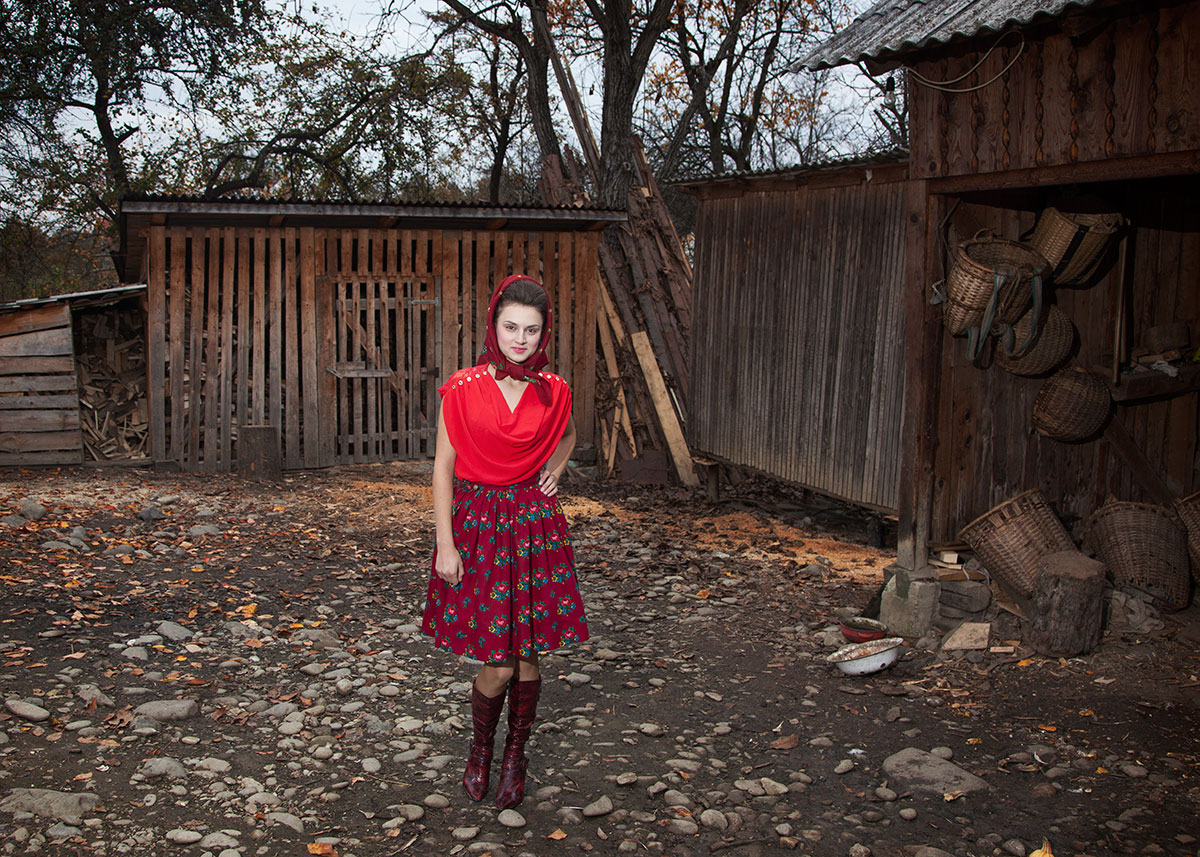
After years of idolizing all that is new, a sudden shift made old headscarves the “it” fashion item. And suddenly an older aunt’s forgotten linens are rediscovered family assets.
Private Dirge for Anuţa, Breb, 2000
The first duty when finding a dead body is to light a candle to frighten away the spirit of death. Three days of funeral preparations follow. Villages have no undertakers. Families prefer to dress their departed themselves. Anuţa’s cousin cries out a sing-song mourning dirge, her relatives prepare for the priest and the village waits in her courtyard outside. She cries the words of ‘mother’ as they do when mourning all women.
Sunday Worship, Sîrbi, 1999
Tradition runs deep in villages with five-hundred-year-old log-cabin churches. Where a man stands for service and where he puts his hat, are privileges passed down through inheritance.
First Plowing, Sîrbi, 2000
A good man will plow more than an acre in a day. A good woman will be sure his fried bread and soup arrive at lunchtime - still hot from home.
Boys in Trees, Sîrbi, 2000
After months indoors, fearing the health dangers of drafts and cold breezes, a balmy day liberates the young boys of the village to run wild.
Maria, Sîrbi, 2003
The nearest high school to this village is an hour by bus. Two years ago, a majority of children stopped their education at the eighth grade. Now, a majority spends the school week with relatives in Sighet working toward a diploma.
Cocon, Sîrbi, 2000
Petruc will soon begin helping his father wrangle horses in summer and carry water from the frozen river in winter. As he grows, his hands will become large and callused from hard work. Yet his mother will never let him go outside without covering his head.
Spring Storm, Glod, 2000
Good gossipers know when to exaggerate, when to tell the truth, and when to pretend they saw nothing.
Cleaning their Church, Rozavlea, 2000
Each village has an annual pilgrimage claimed as their special event. Peasants from many surrounding villages will attend service at Rozavlea’s church in honor of Saint Maria’s birthday.
The women of Rozavlea know their friends in other villages will have a critical eye toward
cleanliness.
Ileana Doca, Sîrbi, 1999
“I’m only one person now, and I have to do everything. Feed the pig, make the food, and clean the clothes. I find a way to do everything, yet I can’t die.
Life will be better when I’m dead.”
The Weavers, Sîrbi, 2000
In summer, the family loom lies jumbled in the barn like a heap of broken scythe handles. But in winter, it is time for women to maintain the family’s supply of woven wealth, and for a young woman to begin creating her dowry. The loom takes shape in the family living space and its shuttle again flies for hours a day.
Petru and the Claie, Sîrbi, 1999
The quality of a haystack can be told by its color. The quality of a man by the time it takes him to bring one home.
Tiranca, Sîrbi, 2003
Black cloth is the mark of a widow. She will wear something black every day she remains on earth until God decides she should join her husband.